
One report, the whole picture. Why combine WCAG audits and blind user testing?

Technical audit and testing with a blind user as standard
In professional accessibility projects, the standard should be a combination of two complementary testing processes: a technical audit conducted by a WCAG expert and usability testing conducted with end-user participation. Our observations suggest that the market standard is exclusively for WCAG technical testing, which, at best, will only identify formal issues. In practice, the minimal and most effective form of usability testing involves testing with a blind person.
It's worth emphasizing that testing conducted by a professional blind tester is not the same as traditional testing with representative end users. Such a tester combines experience in everyday use of assistive technologies with a thorough understanding of accessibility standards and interface principles. This allows them to quickly identify the source of problems while simultaneously assessing the system from a real-world perspective.
The user and their tasks are always the point of reference. They verify whether the process can be completed in an understandable manner, whether the interface guides the user logically, and whether there are no context losses or blockages that prevent the achievement of the goal.
Why does this approach make sense?
A reliable accessibility assessment requires combining various testing methods. A WCAG audit is a necessary reference point and organizes formal requirements, but it alone does not allow for assessing whether a system is truly usable in real-world scenarios. Therefore, usability testing is not an add-on, but a necessary complement to the technical assessment.
In practice, testing with a blind person, at a minimum, very quickly reveals barriers that also impact other users. These are usually not only visual perception issues but also structural and navigational barriers, such as unclear logic, inconsistent content structure, focus traps, or messages that don't guide the user to a solution.
WCAG audits and usability tests serve different, complementary roles. Only when combined, an accessibility assessment can be considered complete and reliable.
Usage Testing with a Blind Tester
A blind tester goes through the same screens and processes, but from the perspective of real-world use. Rather than performing a second WCAG audit, they verify how the system works in practice and how quickly navigational, interactional, and structural barriers are revealed.
The usage report focuses on the user experience and shows where the user loses context, where the interface logic becomes unreadable, which elements are confusing despite being formally correct, and what blocks the execution of the task from beginning to end.
What does the report look like?
Issues and recommendations are summarized in a single, coherent document. At a glance, both the formal perspective, based on WCAG, and the usability perspective, based on real-world experience using the system, are visible.
This overview allows for direct comparison of issues identified in different processes and from different perspectives. This allows the client to gain a more complete picture of issues, better understand their causes and consequences, and allow them to consciously implement corrective actions.
Are the same problems recurring?
Yes, there are recurring issues, and this is a natural consequence of combining two perspectives. This doesn't mean duplicate work but rather confirms that a given problem has real significance, both formally and operationally.
On the one hand, it is visible as a violation of WCAG requirements, and on the other hand, as a barrier that hinders or prevents completion of the task. Combining these perspectives allows for a better understanding of the impact of the problem on users and facilitates prioritization by the teams responsible for implementing changes.
What do best practices say?
Recommendations from institutions setting accessibility standards are consistent on one point. A reliable accessibility assessment requires a combination of WCAG compliance assessment and testing conducted in real-world conditions, including the use of assistive technologies and the participation of people with disabilities.
The World Wide Web Consortium explicitly states in its WCAG-EM methodology that engaging users with disabilities allows for the identification of barriers that are not easily detected through expert assessment alone. The documentation emphasizes that compliance analysis alone does not provide a complete picture of accessibility in practice.
Similarly, the GOV.UK Service Manual, the official set of guidelines for digital services in the UK public administration, recommends combining automated and manual testing and regularly reviewing services using assistive technologies. The goal of these activities is to assess how the system performs in real-world scenarios, not solely at the level of formal compliance.
Section508.gov, run by the U.S. General Services Administration, indicates that only by combining compliance assessment with usability testing conducted with representative users, including people with disabilities, can the full range of issues affecting system accessibility be identified.
In this context, adopting a combination of a WCAG audit and user testing with a professional blind tester is the optimal approach. A blind tester uses the interface exclusively with assistive technologies, relies on structure, semantics, and interaction logic, and performs tasks in a manner like the most demanding user scenarios. This approach simultaneously meets the requirements for manual testing using assistive technologies and testing with users with disabilities, as outlined in industry recommendations.
This approach does not preclude expanding testing to include additional user groups, but as a starting point, it provides the best quality-to-scope ratio and allows for a reliable picture of accessibility with a reasonable amount of effort. Therefore, we consider it not an optional option, but rather a sensible and practical minimum in professional accessibility projects.
Summary
Ensuring accessibility in accordance with applicable regulations is not limited solely to meeting the formal WCAG criteria. Both the European Accessibility Act and the Polish Accessibility Act require actual accessibility, understood as the ability of people with disabilities to independently and effectively use services. This means assessing not only compliance but also the actual operation of the system in practice.
A WCAG audit is a necessary foundation, but it does not allow for assessing whether a user is able to complete the process, understand the messages, and achieve their goal. Therefore, as a reasonable minimum, we consider combining a WCAG audit with usability testing conducted by a professional blind tester. This approach most effectively combines formal assessment with verification of actual system use using assistive technologies.
This minimum understanding allows for a reliable picture of accessibility that is consistent with both legal requirements and the intent of the regulations. Accessibility then ceases to be a declaration of conformity and becomes a real feature of the digital service.
The approach described does not replace other forms of user research but defines a minimum standard of evaluation that allows for meeting both the formal requirements and practical goals of accessibility.
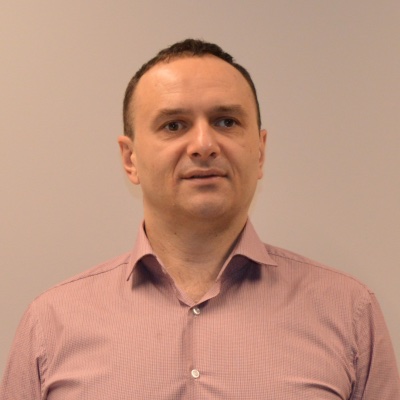
Dawid Górny
Accessibility tester and consultant, ambassador for people with disabilities. For over twenty years, he has been using assistive technologies at work and in everyday life. He is active in non-governmental organisations and is passionate about accessibility in culture and art. IAAP Certified Professional in Accessibility Core Competencies (CPACC).